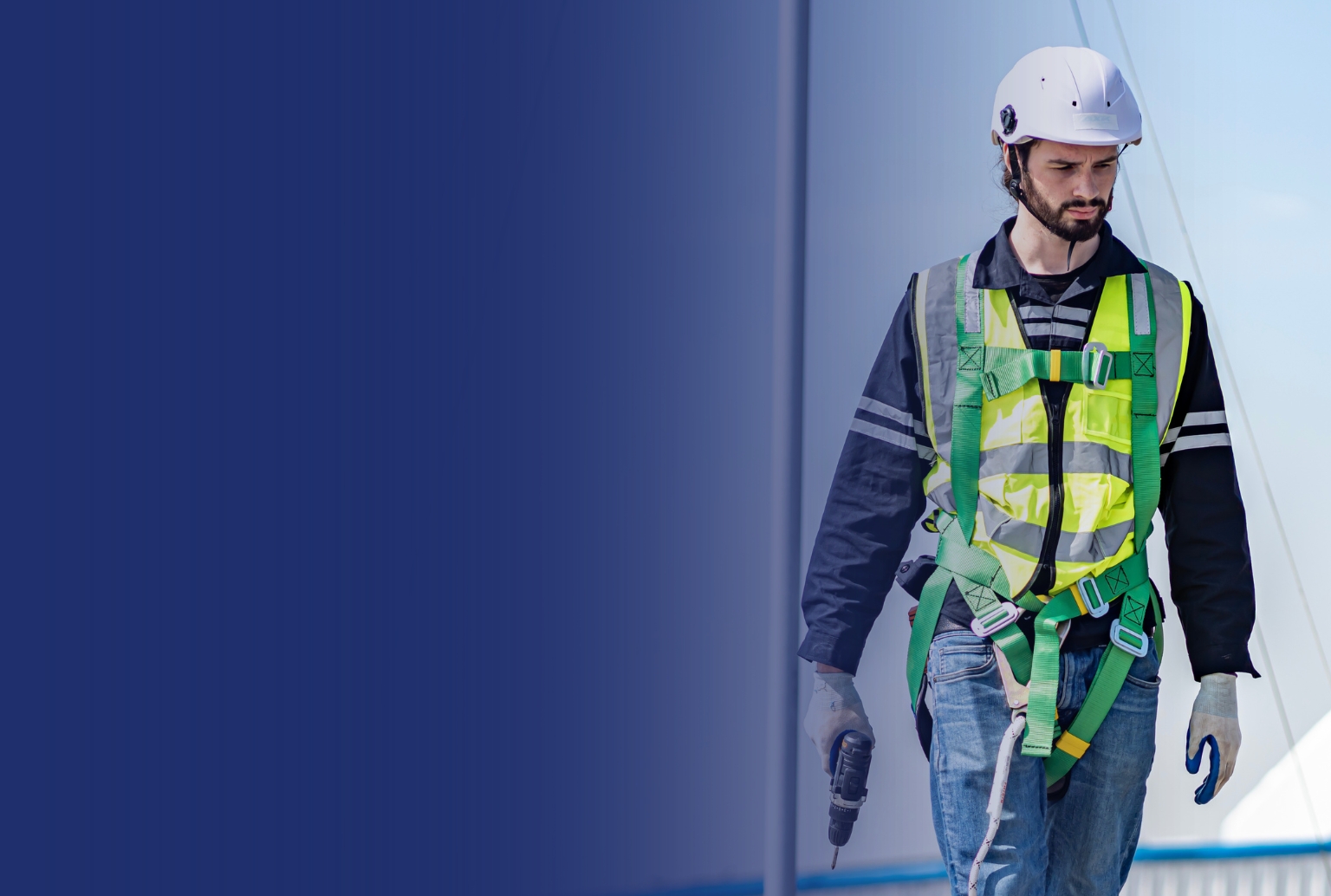
Type 2 Safety Helmets Are Now Required. Here's What That Means for Your Crew.
Here is what the CCSC Type 2 helmet mandate actually requires, who it applies to, and the one thing to confirm before you place an order. Then a harder question about why this landed on your desk in the first place.
What changed?
As of July 1, 2026, every Canadian Construction Safety Council (CCSC) member site requires workers, subcontractors, and visitors to wear Type 2 safety helmets with manufacturer-approved four-point chin straps.
If you work with major general contractors like PCL, EllisDon, Bird, Aecon, or Pomerleau, this requirement is already in effect.
Unlike traditional Type 1 hard hats, which primarily protect against impacts to the top of the head, Type 2 helmets also provide protection against side, front, and rear impacts. Those are the types of injuries more commonly seen during falls. The integrated chin strap helps ensure the helmet stays in place during a fall, when it’s needed most.
Research from Virginia Tech found that Type 2 helmets can reduce concussion risk by approximately 34% and skull fracture risk by as much as 65% compared with traditional Type 1 hard hats.
The goal is simple: reduce serious head injuries and improve protection during falls, which remain one of the leading causes of fatalities on construction sites.
The safety benefits are clear. Buying the helmets is easy. Managing the change is where many businesses struggle.
Who actually counts as “everyone”
“All personnel, trade partners, and visitors” is broader than most people assume. It’s not just the crew swinging hammers. It’s the sub who’s on site for twenty minutes to give a quote.
It’s the delivery driver dropping materials. It’s the insurance adjuster, the architect doing a walkthrough, the client stopping by to see progress. If a general contractor is a CCSC member and someone sets foot on that site, they need a compliant helmet, with no exceptions for “I’m only here for a minute.”
That’s worth passing along to anyone who schedules site visits, not just your safety lead. A sales rep or estimator showing up without one isn’t just a compliance gap; it’s the kind of thing that gets someone turned away at the gate, which is its own small headache and a bad look in front of the GC.
One thing worth flagging before you order gear
Before ordering dozens of helmets, confirm the required electrical classification.
Type refers to impact protection.
Class refers to electrical protection.
Some general contractors require Class E helmets across the entire site, while others only require them for specific work.
Don’t assume. A five-minute conversation with the site superintendent could save thousands on unnecessary purchases or prevent your crew from being turned away at the gate.
The wrong purchase isn’t just expensive, it can delay work, create frustration, and leave crews waiting while the right equipment is sourced.
The hard hats aren’t the hard part
Buying compliant gear takes an afternoon. Anyone can do that. What actually determines whether this mandate is a non-event or a week of headaches is everything around the purchase:
Did your onboarding process catch this, or did a foreman have to flag it at the last second?
Did your subs actually get the memo, or are they going to find out when they’re stuck standing outside the gate?
Honestly, do you even have a process for tracking these shifts, or did this whole mess land directly on your desk because nobody else is looking?
If it landed on you, that’s the real thing this mandate exposed. Not the hard hats. The fact that changes like this still have to run through you personally to get handled at all.
Regulations don’t create chaos. They reveal it.
Every year, construction businesses face new safety requirements, employment standards, technology changes, insurance expectations, and customer demands.
The companies that handle these changes smoothly aren’t necessarily bigger. They’ve simply built systems that don’t depend on the owner noticing everything first.
In well-run businesses:
The owner isn’t chasing everyone down because the business already knows how to respond.
What this costs
When every operational change depends on the owner, the cost isn’t just frustration.
Projects slow down. People wait for decisions. Subcontractors receive inconsistent information. Site access gets delayed. Managers spend their time reacting instead of leading.
Eventually, owners start believing they’re simply “too busy.” Often, they’re carrying work the business should have learned to do without them. That’s owner dependence. And it quietly limits growth, increases risk, and reduces the value of the business.
This won’t be the last change
Today’s conversation is Type 2 helmets. Next month it might be:
- New employment legislation
- A change to WCB requirements
- A software update
- New environmental regulations
- An insurance requirement
- Another customer expectation
You can’t predict every change, but you can build a business that’s prepared to handle them.
Businesses that scale don’t depend on heroics
The strongest construction companies aren’t the ones with the smartest owners. They’re the ones where information flows through documented processes instead of living in one person’s head.
When regulations change, someone knows exactly what needs updating.
When a new employee starts, onboarding already reflects the latest requirements.
When subcontractors arrive on site, expectations have already been communicated.
The owner isn’t the communication system. The business is.